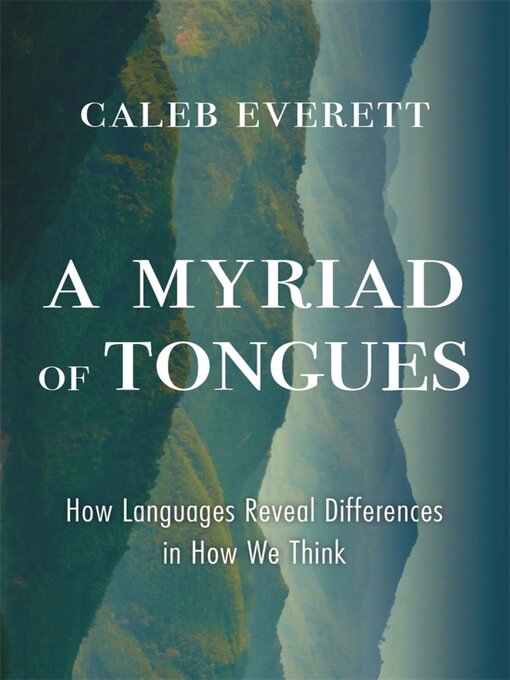
"An assured guide" (New Scientist) to the relationship between the language we speak and our perception of such fundamentals of experience as time, space, color, and smells.
We tend to assume that all languages categorize ideas and objects similarly, reflecting our common human experience. But this isn't the case. When we look closely, we find that many basic concepts are not universal, and that speakers of different languages literally see and think about the world differently.
Caleb Everett takes readers around the globe, explaining what linguistic diversity tells us about human culture, overturning conventional wisdom along the way. For instance, though it may seem that everybody refers to time in spatial terms—in English, for example, we speak of time "passing us by"—speakers of the Amazonian language Tupi Kawahib never do. In fact, Tupi Kawahib has no word for "time" at all. And while it has long been understood that languages categorize colors based on those that speakers regularly encounter, evidence suggests that the color words we have at our disposal affect how we discriminate colors themselves: a rose may not appear as rosy by any other name. What's more, the terms available to us even determine the range of smells we can identify. European languages tend to have just a few abstract odor words, like "floral" or "stinky," whereas Indigenous languages often have well over a dozen.
Why do some cultures talk anthropocentrically about things being to one's "left" or "right," while others use geocentric words like "east" and "west"? What is the connection between what we eat and the sounds we make? A Myriad of Tongues answers these and other questions, yielding profound insights into the fundamentals of human communication and experience.
- Available now
- New E-book Additions
- New kids and teen additions
- Most popular
- Best of the Library Writers Project
- Black Pacific Northwest Collection
- Manga from VIZ Media
- Ukrainian e-books
- See all ebooks collections
- New Audiobook Additions
- Most popular
- Available now
- New kids and teen additions
- LGBTQ Young Adult Audiobooks
- Family-Friendly Audiobooks 🎧
- Always Available Audiobooks
- Audiobooks Read by Celebrities
- See all audiobooks collections
